Understanding Balancer: a beginner’s guide and review
Automated portfolio manager and trading platform, from the 2020 Bronze release to veBAL, v3, and the 2025 exploitIf you've wondered how a DEX can double as a self-balancing index fund, and what that design is worth after a $128M exploit, this review of Balancer has the answer. You'll learn how multi-asset custom-weight pools work, how $BAL distribution evolved from liquidity mining into veBAL, and what the November 2025 v2 rounding-error hack teaches about relying on audits.
Balancer is an automated market maker (AMM) platform based on an N-dimensional invariant surface, a variation in design to the formula used by Uniswap, that allows for multi-asset pools that balance, like an index fund. This has many implications for mitigating impermanent loss , asset management, and certain trading strategies.
In this article, we will provide a review of Balancer where we will dive into the team behind the protocol, its design, and the ecosystem supporting it. By doing this, we hope to better assess the impact of Balancer on the rest of decentralized finance (DeFi) and Crypto at large.
In this analysis of Balancer, we will cover 6 different sections, as follows:
- legitimacy
- purpose
- tokenomics
- ecosystem
- the road to 2026
- summary
Legitimacy
Balancer was founded by Fernando Martinelli,
a Brazilian serial entrepreneur and longtime Maker ($MKR ) community member,
as a project of Balancer Labs.
Since early 2018, the fundamental design of Balancer was being tested
as a project on BlockScience.
Martinelli and former Maker technical partner Nikolai Mushegian published the
Balancer Whitepaper in late 2019.
Mushegian, who had also helped design MakerDAO and DAI,
died in October 2022 in Puerto Rico.
The team then brought Mike McDonald, creator of mkr.tools (deprecated),
to build the platform.
In it, they detailed how a Balancer pool would build on the
constant product market maker of Uniswap with a constant value market maker
capable of functioning as a self-balancing weighted portfolio and a
price sensor.

Balancer did not do an ICO. They simply launched their product in early 2020. In March 2020, they raised a $3M seed round by Placeholder and Accomplice. In June 2020, Balancer followed Compound ($COMP ) in launching a governance token, $BAL , becoming the second-ever DeFi project to do so. Before the launch of $BAL , Balancer had $40M in total value locked (TVL). By late 2020, Balancer was the fourth-largest DEX after Curve ($CRV ), Uniswap, and SushiSwap, with roughly $600M in TVL.
Balancer’s original codebase was fully audited three times: by Trail of Bits, ConsenSys, and OpenZeppelin. That pedigree deserves an asterisk today: in November 2025 a rounding-error bug in Balancer v2, code that had also passed multiple audits, was exploited for about $128M (covered in the road to 2026 below).
Purpose & Functionality
The goal of Balancer is to provide a flexible platform for programmable liquidity. In Balancer, anyone can create a pool with several assets, potentially simulating their whole portfolio. Instead of paying fees for portfolio managers to use rebalancing strategies and actively manage the fund, the pool balances itself. At the choice of liquidity providers (LPs), they can set up a pool with up to 8 tokens and specify any custom percentage distribution to maintain, or add their liquidity to an existing pool. Moreover, LPs can also set their fees for their pools. LPs can even set up a fully private pool, where only they are allowed add liquidity. At this point, it helps to compare Balancer with Uniswap, a very straightforward DEX that’s also based on the AMM model.
| Feature | Uniswap | Balancer |
|---|---|---|
| Max no. of supported tokens per pool | 2 | 8 |
| Relative weight of assets in pool | 1:1 | custom |
| LP token purpose | bookkeeping | functional ERC-20 |
| Pricing mechanism, internal | trade-based | trade-based |
| Pricing mechanism & adjustments | relies on arbitrageurs | relies on arbitrageurs |
| Trading fees | 0.30% | set by LPs, per pool |
| Protocol fees | none | none |
| Governance token | $UNI | $BAL |
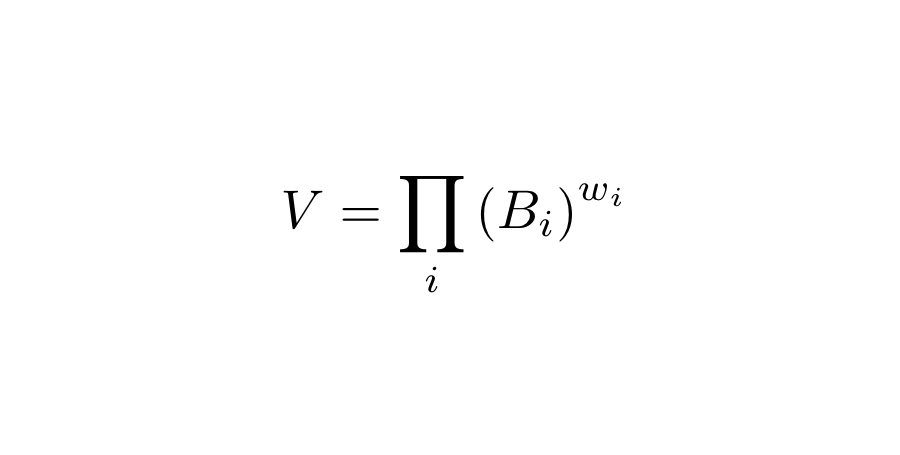
The core differentiating feature of Balancer is its multi-asset pools with custom percentage-weighing. The benefits of this approach are two-fold. First, swapping orders from the DEX side can be optimized to offer better prices and lower slippage, since an asset can be in many pools at once. Second, the LP may optimize the weight distribution of his pool depending on his view of the market i.e. if the LP is long on one asset over others in the same pool, then the pool can be set with the favored asset having a greater weight. These advantages in slippage, pricing, and pool dynamics create a flywheel effect for Balancer.
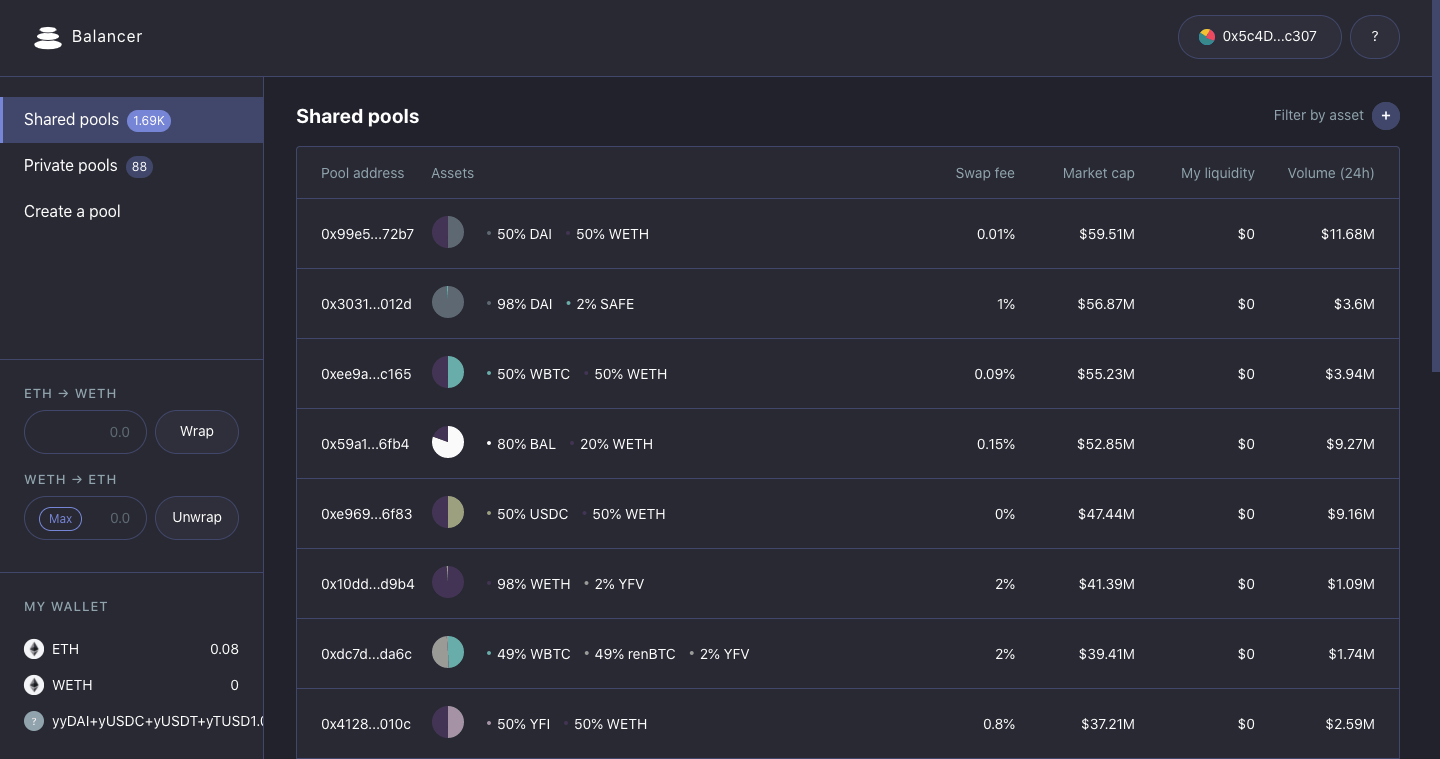
Like many other core DeFi applications, anyone — a user, a smart contract, or a DAO — can create a Balancer pool. Balancer thus represents a new DeFi primitive to provide novel use cases and experiences in DeFi tools and applications. Based on this architecture, interesting use cases like smart pools can be created which are controlled by a smart contract. One example of a private smart pool is the liquidity bootstrapping pool template by the Balancer team which serves to create deep liquidity for a new token issue without having to resort to expensive market making.
Tokenomics
The Balancer Protocol was launched without a native token. LPs received fees that traders paid when using the DEX. No other intermediate steps were needed. This is an optimal tokenomics design, without the need for adding an additional token for “internal payments” when none is needed.
Balancer decided to launch $BAL , given the success of Compound’s $COMP token
as a model for further decentralization and
as an incentive to attract liquidity with the novel liquidity mining
phenomenon.
As a governance token, it does not add an extra step to using the DEX either
as a trader or an LP.
Instead, it can be “mined” or “farmed” by LPs.
There is a total supply of 100M $BAL tokens, where the team, future investors,
and the ecosystem fund reserved 35M with different conditions.
In the original program,
the remaining 65M $BAL were distributed at a rate of 145k per week to LPs,
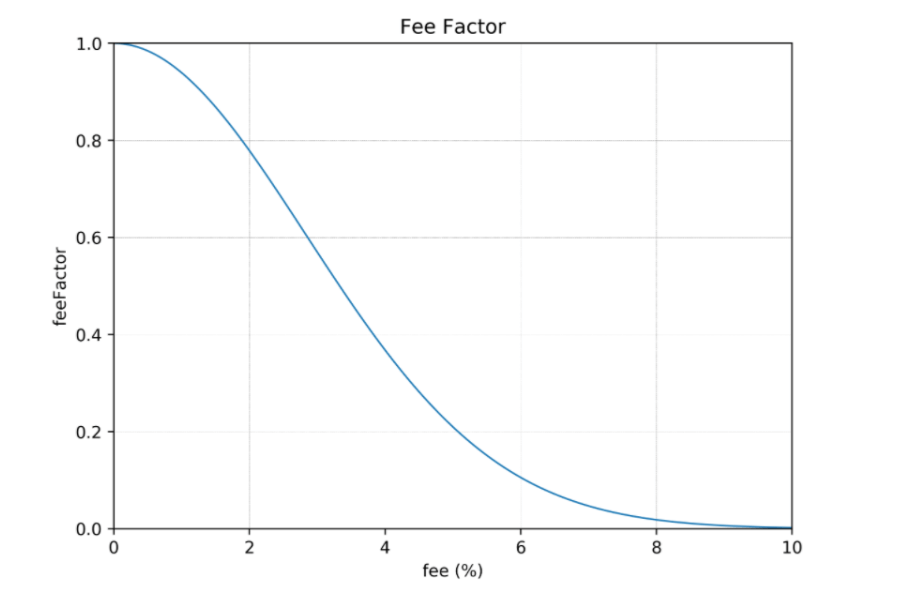
with multipliers called feeFactor (rewarding low-fee pools) and wrapFactor
(penalizing “soft-pegged” pairs like USDC–USDT)
steering rewards toward useful liquidity.
That
first-generation liquidity mining program
is history.
Since 2022, emissions and governance weight run through
veBAL, a vote-escrow
model borrowed from Curve: you lock 80/20 BAL/WETH pool tokens for up to a year,
and your locked position earns a share of emissions and protocol fees while
directing which pools get incentives.
$BAL can be found with the most liquidity in Balancer, unsurprisingly. Check the exchanges where you can find $BAL with the most volume and liquidity.
| Exchange | Trading Pairs |
|---|---|
| Balancer | $BAL/$wETH, $BAL/$wBTC |
| Binance | $BAL/$USDT, $BAL/$BTC |
| OKX | $BAL/$USDT, $BAL/$BTC |
| Uniswap | $BAL/$wETH |
| HTX | $BAL/$USDT, $BAL/$ETH |
Ecosystem
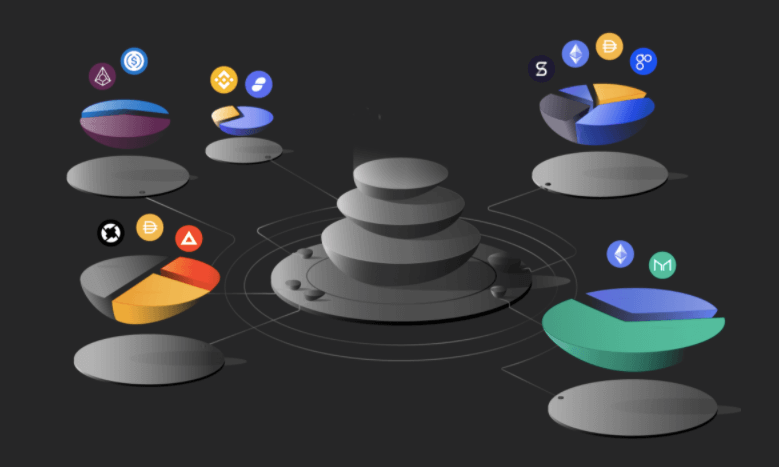
Balancer has a vibrant and engaged ecosystem.
As a DEX, its classical ecosystem players are traders who use the service
and liquidity providers (LPs) who make the market.
However, Balancer is also an increasingly more decentralized protocol
so $BAL holders are an important constituency.
Finally, Blockchain devs, DeFi architects ,
and others who buidl are important to the rest of the Balancer community
as the protocol is also a DeFi primitive,
a permissionless component whose functions can be composable
or made to work together with other DeFi apps.
Balancer Ecosystem Fund
A total of 5M $BAL tokens were set aside for strategic partnerships. At the time of the original review, the fund was valued at over $100M, with no grants or withdrawals yet made from it. Grant-making has since been formalized through community programs under the direction of Balancer governance.
Developer support
There is a detailed explanation in the Balancer docs of core concepts, as well as coding examples and instructions for working with the Balancer protocol, whether through smart contracts or its DEX trading interface via API. The mathematics behind Balancer pools and the smart order routing of the Balancer DEX is also described therein, as are the functions of Balancer pool tokens and the security of the protocol.
Partnerships & Community | Governance | Roadmap
Balancer called its 2020 version the Bronze release, with a Silver release planned for optimized gas usage and a Golden release whose design was still open. That metallic naming scheme was retired: what shipped instead was Balancer v2 in 2021, with a single vault architecture that holds the assets of every pool, and later v3 in December 2024 (see the road to 2026 below).
The Balancer team worked hard to decentralize as many decisions on governance as possible, and the level of community involvement has stayed high.
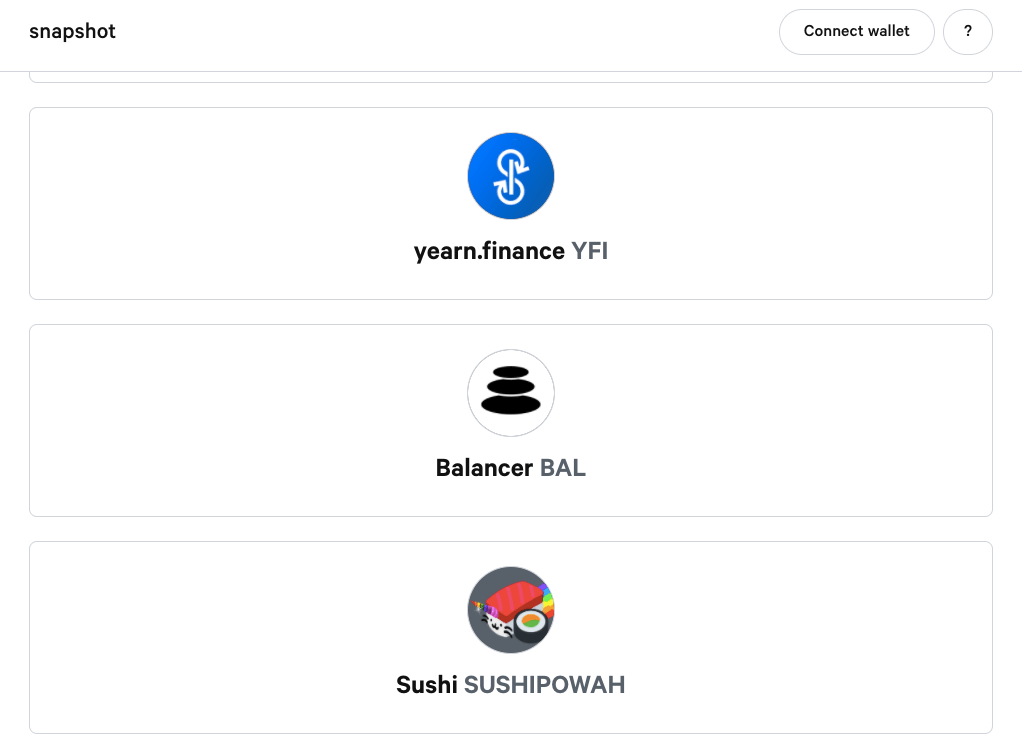
Balancer has developed a gasless governance tool “Snapshot”. The tool works off-chain by tracking blockchain blocks to conduct polling and integrating with the Web3 stack. This allows the pool to see who held which tokens during the voting process. Both proposals and votes are stored on IPFS as signed messages. The tool has been made open-source and it is free to create proposals and vote. The Snapshot documentation contains all the information you need to set up a space. Aragon ($ANT ) even developed a plug-in for on-chain execution. Many projects adopted snapshot-based voting early: yEarn $YFI , Aave, and SushiSwap, to name a few. The project took on a life of its own, and Snapshot went on to become the default off-chain voting tool across all of DeFi, a Balancer side project that arguably outgrew Balancer itself.
The road to 2026
The protocol described above, retroactively called v1, has been superseded twice. Balancer v2 launched in 2021 and moved every pool’s assets into a single vault, improving gas efficiency and enabling features like flash loans across pools. In 2022 the $BAL liquidity mining program was replaced by veBAL vote-escrow governance. Balancer v3 followed in December 2024, built around boosted pools and reusable pool hooks.
Then came the hardest lesson. On November 3, 2025, an attacker exploited a rounding error in Balancer v2’s composable stable pools, draining about $128M across six chains in under 30 minutes. The vulnerable code had been audited multiple times, and the flaw sat live for years before being found, a reminder that audits reduce risk but do not eliminate it. Notably, v3 pools were unaffected, validating the newer architecture, but the protocol’s TVL fell sharply in the aftermath. For founders, the takeaway is blunt: “fully audited” describes a process, not a guarantee, and DeFi protocols carry smart-contract risk for as long as capital sits in them.
Summary
Balancer provides a new substrate for DeFi pools with varied and unique use cases. For your run-off-the-mill LP, it gives the option to adjust his exposure to the market while he makes fees. For the average user, it provides a way to make a self-balancing Crypto index of sorts, and invest in it while earning fees. Its DEX also provides a different way of price discovery and thus affordability and low slippage. Six years, three protocol versions, and one nine-figure exploit later, Balancer remains one of DeFi’s most inventive AMM designs, and one of its most instructive case studies in risk.
Read Next


straight to your inbox