Understanding yEarn: a beginner’s guide and review
DeFi yield vaults, from Andre Cronje's solo experiment to a contributor-run protocolIf you've chased lending yields across DeFi protocols by hand and wondered how Yearn automates the whole rotation, this article has the answer. You'll learn how yVaults route deposits into yield strategies, why the YFI fair launch with no premine became the standard other token distributions are measured against, and how Yearn grew from Andre Cronje's solo project into a contributor collective sharing 90% of revenue with stakers.

Yearn Finance (sometimes stylized as yearn.finance) is a DeFi aggregator and yield rebalancer. Funds locked into Yearn contracts are periodically rebalanced between a select group of lending protocols to maximize yield.
TL;DR : You can get a summary of this article on its last section
In this article, we will be taking an introductory look at Yearn Finance to better understand all the hype around it in the DeFi space. In this analysis of Yearn Finance, 5 different sections will be covered, as follows:
- legitimacy
- purpose
- tokenomics
- ecosystem
- summary
Legitimacy
Yearn Finance was created by Andre Cronje, a South African hotshot software engineer and self-proclaimed “DeFi architect” and “one of the older trees” in Crypto. Andre had been doing code reviews of projects on Bitcoin ($BTC ), Ethereum ($ETH ), and others since early on, attracted by the concepts of distributed networks, and decentralized programmable money. After achieving vitality with his code reviews, Cronje joined other projects and eventually started his own portfolio management project. Cronje went for stablecoins because the rest of the market seemed “incomprehensible” and found himself yield chasing on platforms like Compound ($COMP ), Synthetix ($SNX ), and Balancer ($BAL ). At this point, Cronje started to conceptualize a system that would (i) save him time in finding and executing his yield optimization strategies, (ii) others could use for the same purpose, and (iii) would get better at optimizing yield for everyone involved as more people used it. This was the genesis of the scalable, distributed system which eventually became Yearn Finance.

The project first launched as iEarn, and rebranded to Yearn. Vulnerabilities exposed in the contracts in February 2020 almost made Cronje “rage-quit” his involvement. Surprisingly, he built and led the project as a solo developer in those first years, self-funded, and earning no revenue from operating the service beyond the returns available to all users. Yearn’s contracts were audited by Quantstamp on July 2020, shortly before Yearn v2 was launched, when the project started to steadily climb in total value locked (TVL). By September 2020, Yearn had >$750M in TVL and ranked 5th amongst all DeFi protocols by that measurement.
Purpose
The mission of Yearn is to make DeFi simple and accessible for everyone. In many ways, the Yearn web application can be thought of as an entry point to many DeFi services, the main of which is yield farming.
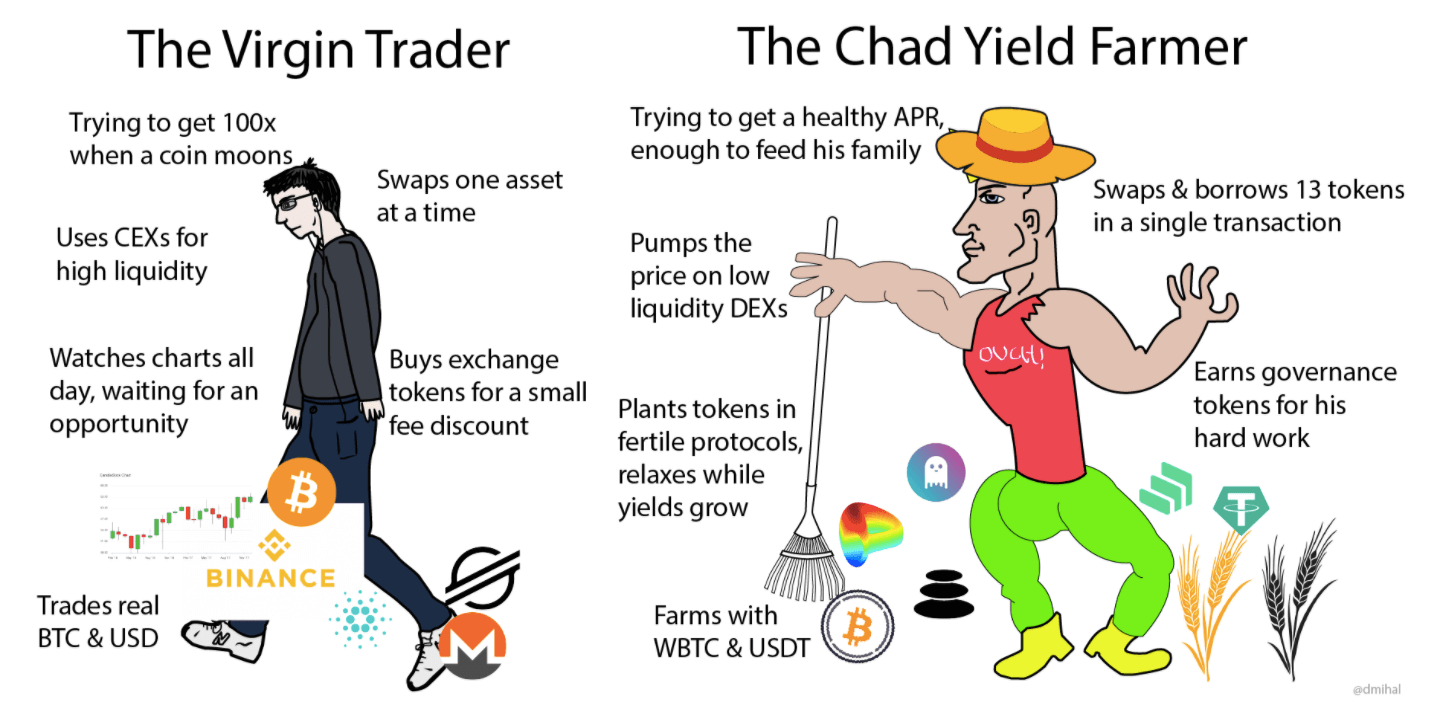
Yield farming has been a buzzword in the latest eruption of DeFi (and the subject of many memes 👨🏻🌾), but it simply can be thought of as strategies that allow you to earn more crypto with your existing crypto holdings. For example, the launch of the $COMP governance token, which was distributed with liquidity incentives, allowed users earning interest by lending their crypto on Compound to “farm” an additional token if they optimised their lending in a certain way, and that token could later be sold for the same crypto, increasing “yield”. As more projects use novel ways to attract liquidity, more complex strategies develop to farm the best yields. Yield farming in Yearn happens automatically in vaults or yVaults.
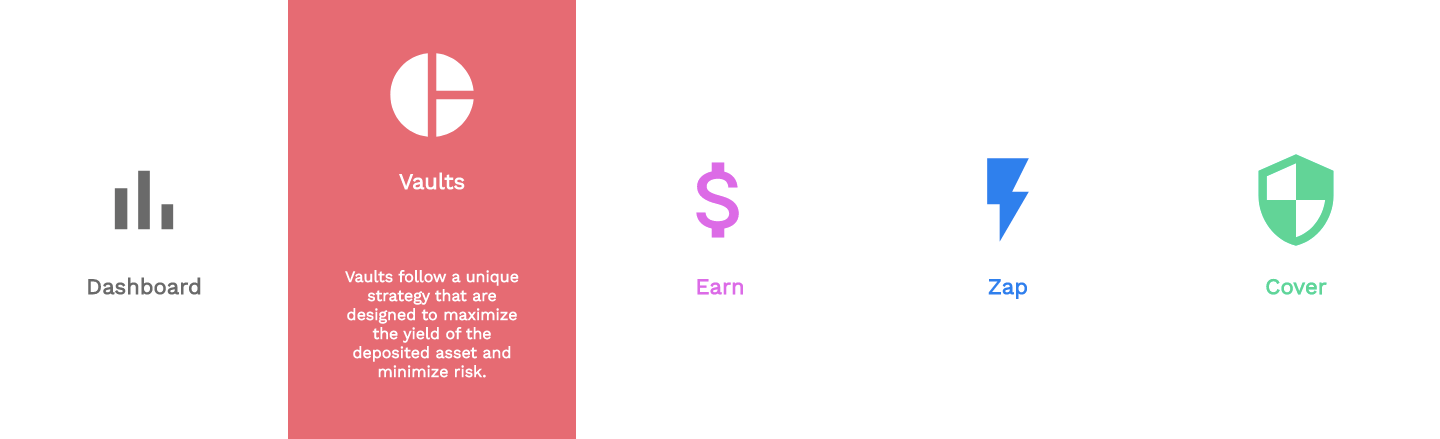
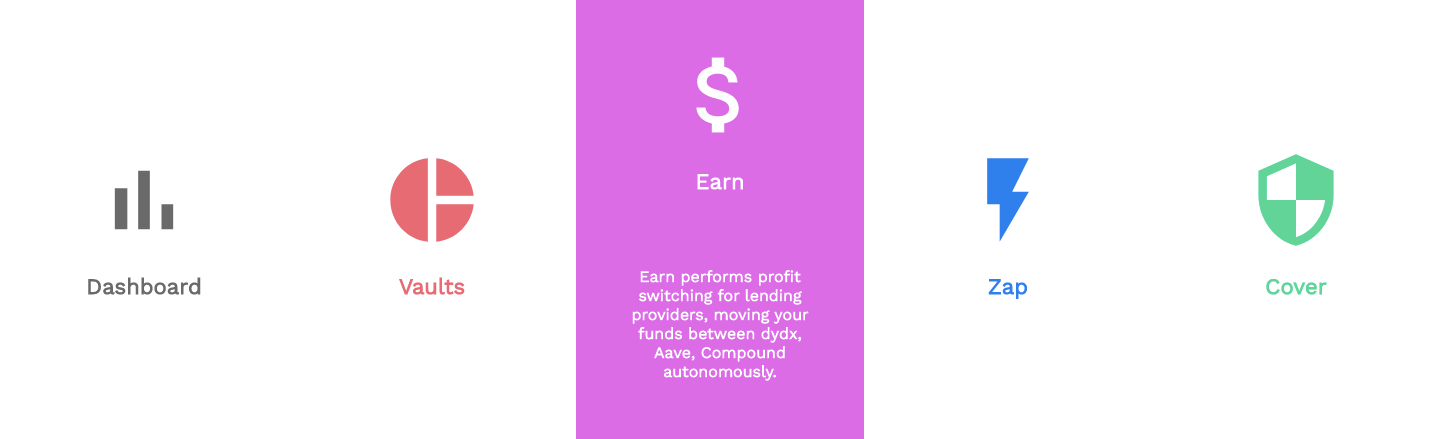
In their original version, yVaults were basically a token container:
you provided a token and received a yToken
so you could track the performance of the underlying asset.
So, if you provided $DAI , you got yDAI.
There were also so-called delegated yVaults
that supported other assets like $LINK , $REN ,
$SNX , and $wBTC but still gave you yDAI
so you did not lose your exposure to your original asset.
The yVault then executed a strategy, which was controlled by governance.
Any rewards additional to the core function of the vault were split between the
strategy creator, the governance ecosystem, and the yield farmers.
The returns were tracked by the growth of, in this example, your yDAI.
Today's v3 vaults keep the same idea with standard
plumbing: they implement the ERC-4626 tokenized-vault standard, so you deposit
an asset, receive a vault token, and watch its value grow as the strategies
compound yield.
As “DeFi made simple”, the Yearn FAQ tells you to “do your own research”. However, it is important to understand that this product interacts with many other DeFi protocols under-the-hood. For example, Yearn optimizes your yield between lending protocols like Aave and Compound. When you deposit a stablecoin in it, not only are you exposed to the risk of the stablecoin peg failing and the risk of the Yearn contract being buggy, but also the risk of the smart contracts from those lending protocols failing. These risks are “stacked”. Moreover, you must consider gas prices and other fees upon deposit/withdrawal, as you may earn nothing or lose money despite having a return by the Yearn dApp if your return is less than the deposit+withdrawal transactions, particularly during times of high gas fees.
To interact with Yearn, all you need is to connect a Web3 wallet like MetaMask. Other crypto wallets like Trust Wallet, Portis, and Torus are also good options. No KYC/AML is needed.
Tokenomics
Originally, Yearn had no native token.
However, in July 2020, Cronje decided to experiment with full decentralized
governance, in what is now widely recognized as a fair launch, perhaps the
fairest in Crypto since $BTC itself.
The governance token YFI is used for voting and
for receiving economic rewards in Yearn.
A total of 30,000 YFI were minted, and were all released at once,
with Cronje not allocating any for himself and with no premine.
YFI was earned by staking the yCRV LP token received from the
Curve
y pool.
However, all the supply has been distributed already.
YFI became the most successful token launch of 2020.
Its parabolic 10,000x run came with yields of up to 1,000% during staking.
Impressive that a token Cronje announced by saying it would be “completely
valueless” not only proved so valued by the market, but gave the whole
Crypto-Verse that roar 🦁 with echoes of the 2017 days of the ICO craze.

YFI was used to vote dozens of times in the first months via Yearn improvement proposals (YIPs) for protocol upgrades on Yearn’s now-retired ygov.finance sister domain, with the first seven votes held the week after launch. Early governance added withdrawal fees of 0.5% to the yVaults and distributed them to YFI holders. Both mechanisms have since been superseded: governance today runs through locked-YFI voting, first veYFI and now stYFI, which since February 2026 routes 90% of protocol revenue to stakers, while the old withdrawal fee gave way to standard performance and management fees on the vaults.
YFI is traded in secondary markets as well. According to CoinMarketCap, YFI is found with the most volume and liquidity on the following exchanges:
| Exchange | Trading Pairs |
|---|---|
| Binance | $YFI / $USDT, $YFI / $BTC, $YFI / $BNB |
| Uniswap | $YFI / $wETH |
| OKX | $YFI / $USDT, $YFI / $BTC, $YFI / $ETH |
| 1inch | $YFI / $sUSD, $YFI / $ETH |
| HTX | $YFI / $USDT, $YFI / $BTC, $YFI / $ETH |
Ecosystem
Andre started as the sole developer of Yearn, but that era is over: Cronje stepped away from the project in 2022, and Yearn is now built and maintained by a collective of independent contributors, with the protocol in the hands of YFI holders. An ecosystem of Yearn members, or yCosystem, was birthed early on. Moreover, it is fair to say that these days, yield farming is its own community with its own subculture (and quality memes), and Yearn is very much part of that.
yDAO — Yearn Community Funding
The yDAO has been set up with the specific purpose of funds allocation.
By keeping it separate from the protocol-level governance,
the Yearn community can focus solely on funding those projects that,
according to their sentiment and impact, add value to the Yearn ecosystem.
Their approach is similar to other projects who have set up a so-called
grantsDAO but goes beyond that by including funding for foundation initiatives
normally funded by the core team.
What this allows, for example,
is should extra manpower be needed to complete a sprint for Yearn itself,
the DAO could fund out of this community chest called a guildbank.
At the time, the guildbank held 413,000 DAI and 2.15 YFI in reserves.
Developer & Power user support | Roadmap
In the early days, the official developer documentation lagged behind the product: it did not detail the functionality of the newer yVaults or integration details for other devs, and the community maintained its own quasi-official educational site to fill the gap. That gap has closed. The Yearn docs are now the single official resource, covering the current vaults, integration guides for other devs, the registry of smart contracts, and governance in one place.
Partnerships & Community | Governance
Yearn lists two projects as having a special place in the ecosystem: Curve and Aave. The growth of all of these protocols is interrelated by the design principle of composability that when applied to DeFi is often referred to as “money legos”. The fact that these protocols are trustless, permissionless, and distributed means that another DeFi architect dev can rely on them to craft another dApp. Curve integrates with Yearn to provide liquidity for its stablecoin market and in the process gives their users access to market-making fees on top of the lending interest they get in Yearn, which is possible because Yearn balances between different protocols like Aave.
The community has implemented an on-chain treasury in YIP 36. In the early days, Yearn was giving away grants; a bounty program later took their place.
Yearn since 2020
The solo-developer story this review opened with is now history. After Cronje's departure, the contributor collective shipped two full rewrites of the vault architecture: v2 in early 2021, then the current v3 vaults built on the ERC-4626 tokenized-vault standard. Governance matured in step, from ygov.finance votes to veYFI locking to the 2025–2026 overhaul that introduced stYFI staking, routing 90% of protocol revenue to YFI stakers (the governance docs describe the current system).
The record is not spotless. On November 30, 2025, an attacker exploited an accounting flaw in the legacy yETH pool and drained roughly $9M; part of the funds was recovered and redistributed to depositors. The core v2 and v3 vaults were unaffected, but the stacked-risk warning earlier in this review is as relevant as ever.
In Summary
If DeFi is the rocket fuel that’s powering progress on Ethereum, Yearn is its liquid hydrogen. The arrival of the protocol at the scene put it in the middle of the DeFi ecosystem and powered the defining craze of 2020 Crypto: yield farming. Whether you are looking to participate in the latest yield optimization strategy or just looking for a simple interface to enter DeFi and start earning a yield on your assets, give Yearn a try — just don’t risk more than you are okay losing.
Read Next


straight to your inbox